Remember that when you leave this earth, you can take with you nothing that you have received — only what you have given: a full heart, enriched by honest service, love, sacrifice, and courage.
— Saint Francis
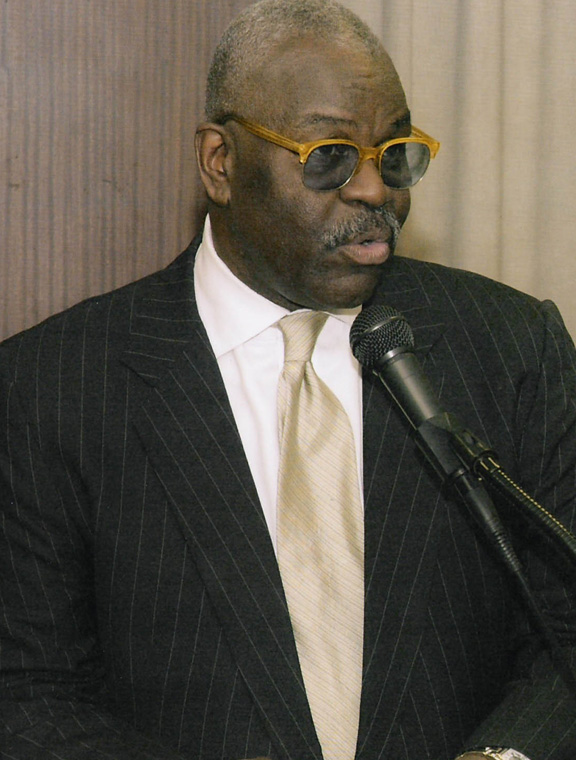
Consummate mover-and-shaker on the Harlem arts scene, Voza Rivers was announced, in the New York Daily News during Black History Month 2009, as one of the most influential New Yorkers in arts and culture by a special committee of elite African American member organizations. Although quiet and unassuming, Voza Rivers is among the leading African American theatre, film, music, and event producers and arts advocates in the country. This fact has not gone unnoticed by the average everyday Harlemite. During this interview an African American man passing by recognized Rivers. He excitedly extended his hand to shake and Rivers took it. The man exclaimed, "You're the one with those shows! Keep it up brother! Keep up the good work!" It is unusual that Rivers, this "brother behind the scenes" as it were, would be recognized on the street, but with many irons in the fire and credits too numerous to list, it is safe to say that almost nothing cultural happens in Harlem that Rivers does not have a hand in!
Yet, amazingly, this son of Harlem never wanted to enter the theatre! Like numerous young people searching for their purpose in life, he tried many things, some of which may surprise you. His early childhood education took place in two parochial schools in Harlem where he learned discipline, hard work and the catechism. In his racially integrated public high school he developed an interest in accounting and became co-captain of the basketball team. Rivers won a basketball scholarship to college but didn't pursue this opportunity; his grandfather, a Caribbean immigrant with a strong work ethic, felt that it was more important to work than to "play" sports. Unsure what path his life would take, Rivers attended local colleges and worked part-time instead. Eventually he joined the New York City Police Department, enrolling in the College of Police Science (which later became the John Jay College of Criminal Justice). After receiving an Associates degree in Police Science, he received a Bachelors degree and was accepted to law school. But he elected to attend New York Institute of Technology, where he received a Masters degree in Communication Arts. However, of all the schools Rivers attended, the most important one, as he will tell you, was Roger Furman's "school," the school of New Heritage Theatre.
As a young man, Rivers was bashful and shy. In 1964 he decided to take a class in public speaking at the YWCA that was then located on 125th Street next to the Post Office. As fate would have it…
To finish reading this article, purchase this issue today.
Get this article and the rest of Vol. 18, No. 6 for only $7.00
Purchase Now