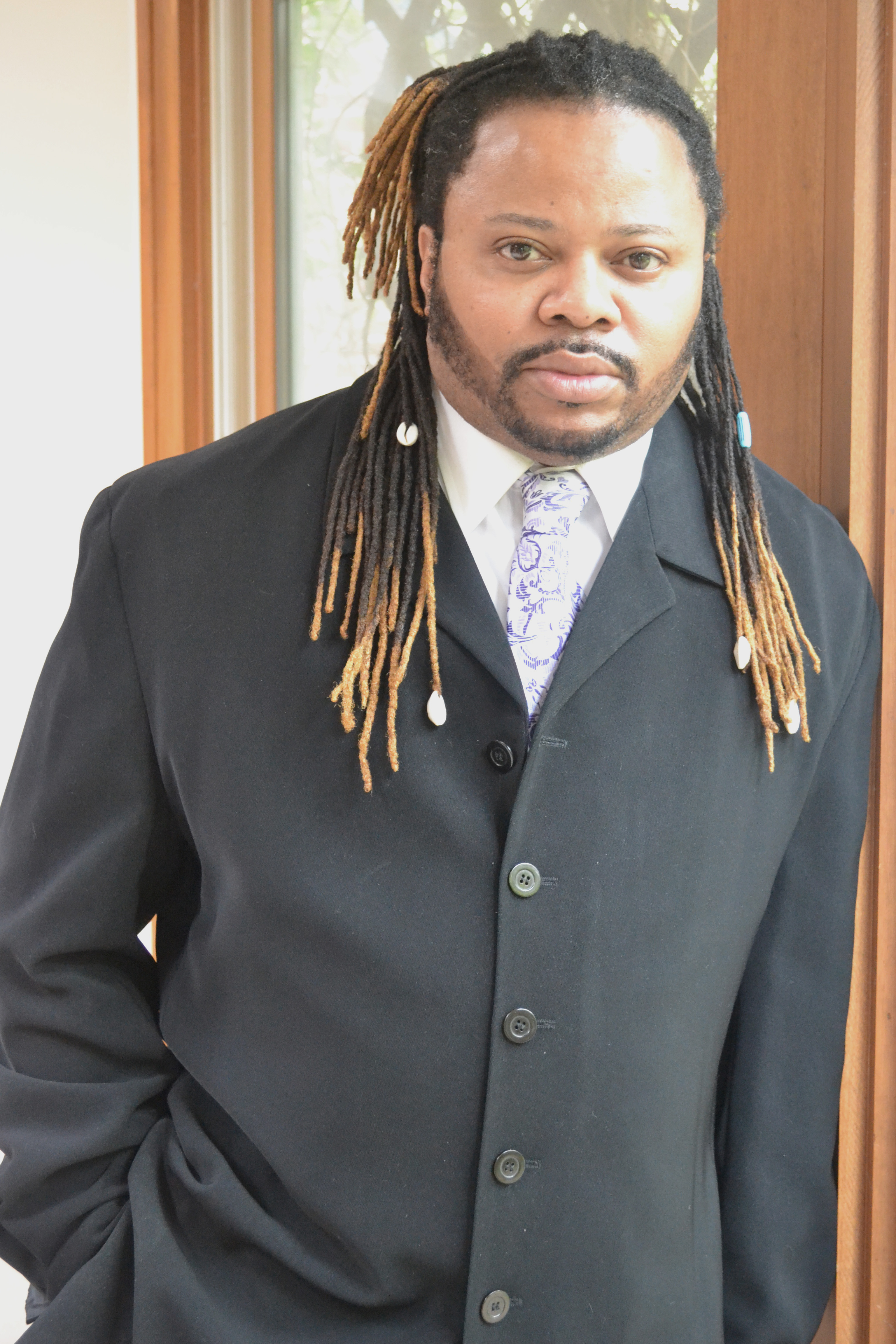
Terrence Spivey is a trailblazer, a creator, a restorer! Since taking the reins of Cleveland's Karamu House as artistic director in 2003, he has blazed an impressive trail — helping to restore the country's oldest African American theatre, while producing brilliant dramatic art, ranging from Langston Hughes's Black Nativity to Tony Kushner's Caroline or Change. As theatre buffs know, the nationally acclaimed Karamu House (affectionately known as "the MU") launched the careers of celebrated African American artists Zora Neale Hurston, Langston Hughes, Ron O'Neal, Gilbert Moses, Minnie Gentry, Robert Guillaume, Bill Cobbs, as well as TV actors Imani Hakim (Everybody Hates Chris) and James Pickens (Grey's Anatomy), among others. Today, after almost a decade in Cleveland, Spivey continues Karamu's legacy of developing new talent, transforming lives, and winning national as well as local accolades.
Spivey's love for show business began in Kountze, Texas at the Majestic Theatre, where once a week his mother, Lillian Cole, would take him and his four younger siblings to view movies. It was there while watching martial arts movies and falling in love with Pam Grier in the "blaxploitation" films of the 1970s that the dramatic wheels began turning for young Spivey. Later, his creativity and ability to act, sing, mime, and tap dance placed him on the stage as the lead in many roles at Prairie View A&M University, where he earned a Bachelor's degree. He and other classmates became the first troupe of Black college students to perform at Washington, DC's Kennedy Center for the Performing Arts as they took part in Vinnette Carroll's Don't Bother Me, I Can't Cope.
After spending nearly two decades in New York City, where he appeared in numerous productions and founded The Powerful…
To finish reading this article, purchase this issue today.
Get this article and the rest of Vol. 20, No. 2 for only $7.00
Purchase Now